The Evolution of Job Searching
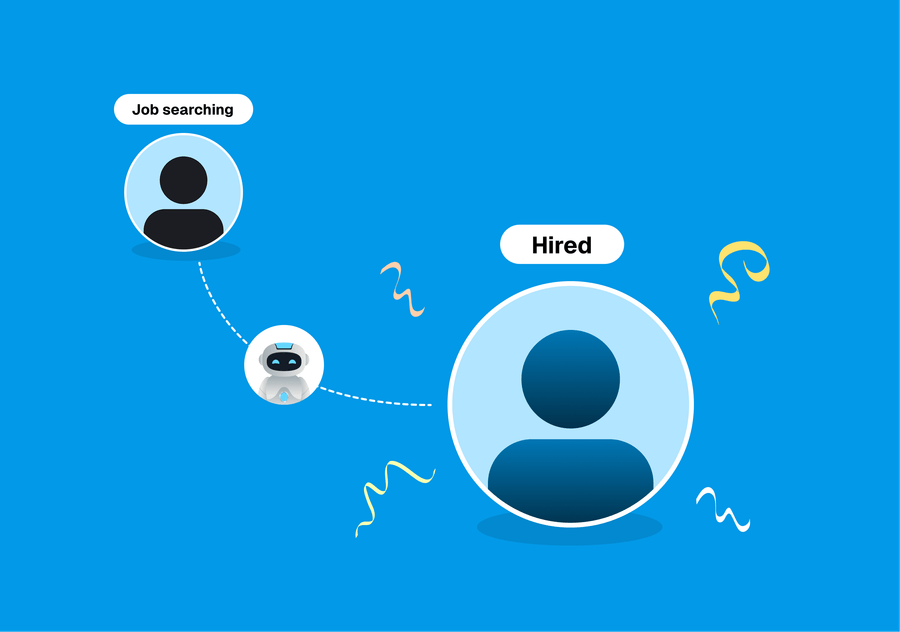
Before AI entered the scene, applying for jobs was a tedious manual process. Candidates spent hours tailoring their resumes for each job, navigating different application platforms, and managing scattered follow-up emails. This manual labor was often time-consuming, stressful, and inefficient, leading to burnout and missed opportunities. AI has entered the recruitment space as a notable change, automating much of this process. Now, job seekers can leverage AI tools to search for relevant job roles, analyze job descriptions, and even submit applications quickly and accurately.
Automated Job Search and Matching
One of AI’s most significant contributions is the automated job matching process. AI platforms analyze the keywords in job postings, compare them to candidates' resumes, and suggest suitable roles. Tools like ApplyQuick AI’s Role Match, for example, allow job seekers to upload their resume and compare it with specific job descriptions. This AI-driven analysis delivers a “match score” that shows how well an applicant fits the requirements of a job. Instead of manually sifting through hundreds of job postings, candidates can now rely on AI to do the arduous work for them. Job matching platforms quickly assess thousands of listings, delivering only the most relevant roles to the user.
AI-Powered Resume Optimization
Another essential way AI is transforming job applications is through resume optimization. Many companies today use Applicant Tracking Systems (ATS) to screen applications. These systems filter out resumes that do not meet specific keyword criteria before a human recruiter even looks at them. Without an ATS-friendly resume, your chances of getting noticed are significantly diminished. AI resume optimizers evaluate resumes against ATS algorithms, highlighting weak points and suggesting improvements. By ensuring your resume is structured, keyword-rich, and formatted correctly, AI tools dramatically increase your chances of making it through ATS filters. Whether you are using AI-Resume Builder or Resume Scorer, the goal is to help job seekers present themselves in the best possible light—tailored to both recruiters and ATS software.
Timesaving Through Automation
AI tools have also automated much of the application submission process. Instead of re-entering personal details, education history, and work experience into every job portal, AI can autofill applications based on a preloaded resume or profile. This feature saves considerable time, especially for users applying to multiple positions across different job boards. For instance, well-crafted AI tools automate the entire application process, sending resumes to the right recruiters and uploading necessary documents with minimal effort. The platform’s integration with major job boards, including LinkedIn, Indeed, and Workday, ensures that your applications are properly submitted without missing critical opportunities. You can track all your job applications from one dashboard, providing a much-needed sense of organization to the process.
Personalized Career Advice
AI does not just simplify the job search; it also acts as a virtual career coach. AI platforms analyze a user’s skills, experience, and qualifications to provide personalized job recommendations and insights. This data-driven guidance helps users apply for roles that match their background while suggesting courses or skills to improve their chances of landing a dream job. Some platforms even offer interview preparation tools, generating mock interview questions based on the job description and resume. These AI tools ensure that candidates are prepared and confident when it is time to meet with potential employers.
Reducing Bias and Improving Inclusivity
One lesser-discussed advantage of AI is its potential to reduce unconscious bias in the hiring process. By automating resume screening and job matching, AI systems focus purely on the skills, experience, and qualifications relevant to the job. This reduces the impact of gender, ethnicity, or background bias that might influence human recruiters. Companies using AI-driven platforms ensure a fairer, more objective hiring process, where candidates are judged solely on their qualifications.
The Future of AI in Job Applications
The future of AI in the job search process looks even more promising. With advancements in machine learning and natural language processing, AI will become even more effective in matching candidates to job roles, offering real-time feedback on applications, and optimizing resumes for maximum impact. Furthermore, AI could be used to forecast career trends, giving job seekers insight into growing industries and roles. Imagine a future where AI helps you not only find the right job but also guides your career trajectory based on evolving market needs.
In Essence?
AI is fundamentally changing the way we search for jobs, making the process more efficient, personalized, and data driven. With AI tools, job seekers can enjoy a simplified, stress-free application process while improving their chances of success. From resume optimization to automated job matching and application submission, AI is taking the guesswork out of job hunting and putting candidates on the fast track to landing their ideal roles. Ready to transform your job search? Start with ApplyQuickAI today.
![30 Dollars an Hour Is How Much a Year? Full Calculation Breakdown [2026]](/HowtoPrepareforanOperationsManager-Interviewsm.png)